
When evaluating technology solutions, membership organizations are often presented with a compelling promise:
“Manage everything from one platform.”
While attractive, this approach can sometimes lead to platform lock-in, where organizations become dependent on a single vendor for multiple critical business functions.
But as organizations grow and their needs evolve, many discover that convenience and flexibility are not always the same thing. In some cases, these all-in-one approaches can lead to platform lock-in, limiting an organization’s ability to adopt new technologies, choose preferred partners, or adapt to changing business needs.
The reality is that technology decisions made today can impact an organizations ability to innovate, reduce costs, improve member experiences, and protect revenue for years to come.
That’s why more membership organizations are asking the important question:
Are we choosing the best solution for our needs, or are we becoming locked into a single vendor’s ecosystem?
What is Platform Lock-In?
Understanding platform lock-in is critical for organizations evaluating long-term technology investments.
This may include:
- Membership management
- CRM functionality
- Payment Processing
- Payment Recovery
- Communication Tools
- Reporting and Analytics
- Online Registrations
- E-Commerce
While having everything under one roof may seem efficient, it can create challenges when organizations want to adopt new technology, improve performance, or negotiate costs.
The more functions tied to a single platform, the more difficult it becomes to make changes without disrupting operations.
The Risk of a One-Size-Fits-All Approach
Every technology provider has strengths. Some excel at member management. Others specialize in payment processing. Others focus on payment recovery, membership engagement, or reporting.
One of the primary risks of platform lock-in is reduced flexibility when organizational needs change. The challenge arises when organizations assume that a provider that performs one function exceptionally well will automatically excel at every other function.
In reality, technology companies often expand beyond their original expertise in an effort to offer a broader suite of services.
While this can provide convenience, organizations should carefully evaluate whether those additional services represent best-in-class solutions or similar bundled offerings.
Choosing technology based solely on convenience can sometimes limit access to innovation, flexibility, and specialized expertise.
Why Flexibility Matters
Membership organizations are not static.
Member expectations change.
Payment technologies evolve.
Security requirements increase.
New solutions emerge.
The technology stack that works today may not be the ideal solution in three months or three years from now.
Organizations that maintain flexibility are better positioned to:
- Adopt new technologies
- Improve member experiences
- Optimize payment performance
- Reduce operational costs
- Respond to changing business needs
- Integrate specialized solutions
Organizations that avoid platform lock-in are often better positioned to adopt new technologies and specialized partners.
The Power of Strategic Integrations
Modern technology no longer requires organizations to choose between functionality and flexibility.
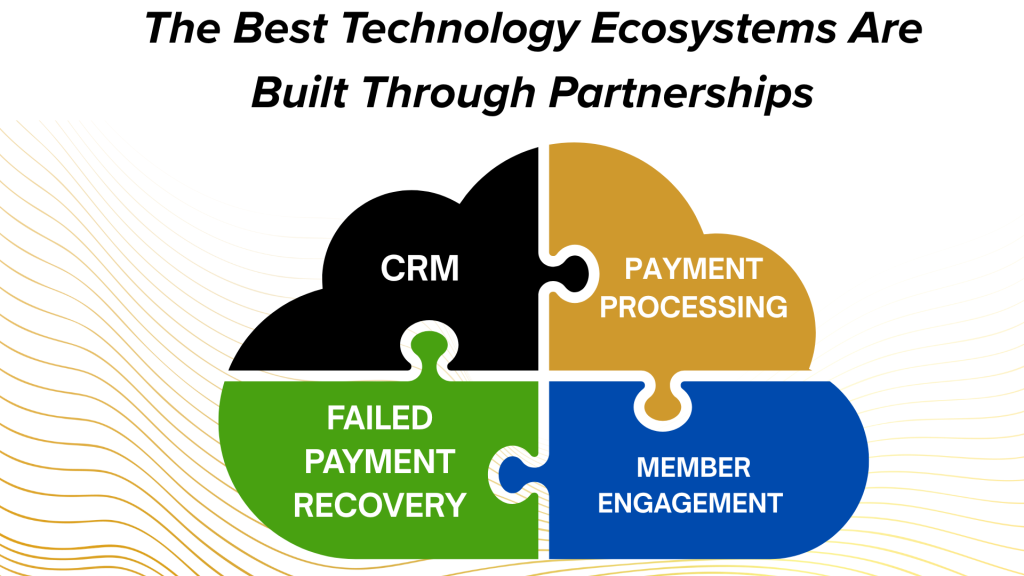
Today’s most effective organizations often leverage a connected ecosystem of specialized partners working together.
For example:
- A CRM manages member relationships
- A payment processor handles transaction authorizations
- A payment recovery solution helps recover failed payments
- Communication tools support member engagement
- Reporting platforms provide actionable insights
When these systems integrate effectively, organizations gain the benefits of specialization without sacrificing efficiency.
Rather than forcing every function into a single platform, integrations allow each solution to focus on what it does best.
Why Choice Creates Competition
One of the most overlooked benefits of flexibility is the ability to choose.
When organizations maintain the freedom to select their preferred partners, providers must continuously earn their business through performance, innovation, and service.
Competition drives improvement.
It encourages vendors to invest in better technology, stronger support, and more competitive pricing.
Organizations benefit when they can evaluate solutions based on results rather than limitations imposed by a closed ecosystem.
Questions to Ask Before Choosing a Platform
- Can we integrate third-party solutions without additional fees or restrictions?
- Can we choose our own payment processor, or are we required to use a specific provider?
- Can we select our own payment recovery partner?
- Can we access our data?
- Will this platform support future growth and evolving operational needs?
- How difficult would it be to change providers if our needs evolve or goals are not being met?
- Can we add new technologies as they emerge, or are we limited to the platform’s roadmap?
- Are we free to negotiate pricing, or as services bundled into a single contract?
- How often are new integrations added, and who decides which partners are supported?
- Can we customize workflows to fit our organizations, or must we adapt our processes to fit the software?
- What happens if one component of the platform falls behind industry standards?
- Does the platform encourage partnerships and innovations, or does it prioritize keeping all services in-house?
The answers to these questions can have a significant impact on long term flexibility and organizational success.
Building a Technology Ecosystem That Grows With You
Technology should empower organizations – not restrict them.
The goal is not necessarily to find one platform that does everything.
The goal is to build a technology ecosystem that supports your mission, your members, and your long-term growth strategy.
The strongest organizations recognize that partnerships, integrations, and flexibility often create more value than attempting to consolidate every function into a single solution.
Because when technology partners work together effectively, organizations gain the freedom to choose the tools that best support their goals – today and in the future.
Final Thoughts
Membership organizations face increasingly complex operational and financial challenges. As technology providers continue to expand their offerings, leaders must look beyond bundled features and ask a more strategic question:
Does this platform give us the freedom to choose the best solutions for our organization, or does it require us to accept every solution it offers?
The strongest technology ecosystems are rarely built around a single vendor. They are built through partnerships, integrations, and the flexibility to adapt as member expectations, payment technologies, and organizational goals evolve.
Ready to see how a flexible recovery strategy can work alongside your CRM and payment processor? Contact eCard Transactions to learn how our integration first approach helps organizations recover more revenue without forcing them to replace the systems they already trust.
Get in touch with a failed payment specialist.
- The Hidden Journey of a Recurring Payment
- Payment Recovery Blueprint: 10 Proven Strategies to Reduce Failed Payments and Protect Recurring Revenue
- The Cost of Platform Lock-In: Why Flexibility Matters in Membership Technology
- The Hidden Cost of a 20% Difference in Payment Recovery
- Payment Recovery Is Becoming A Customer Experience Strategy